

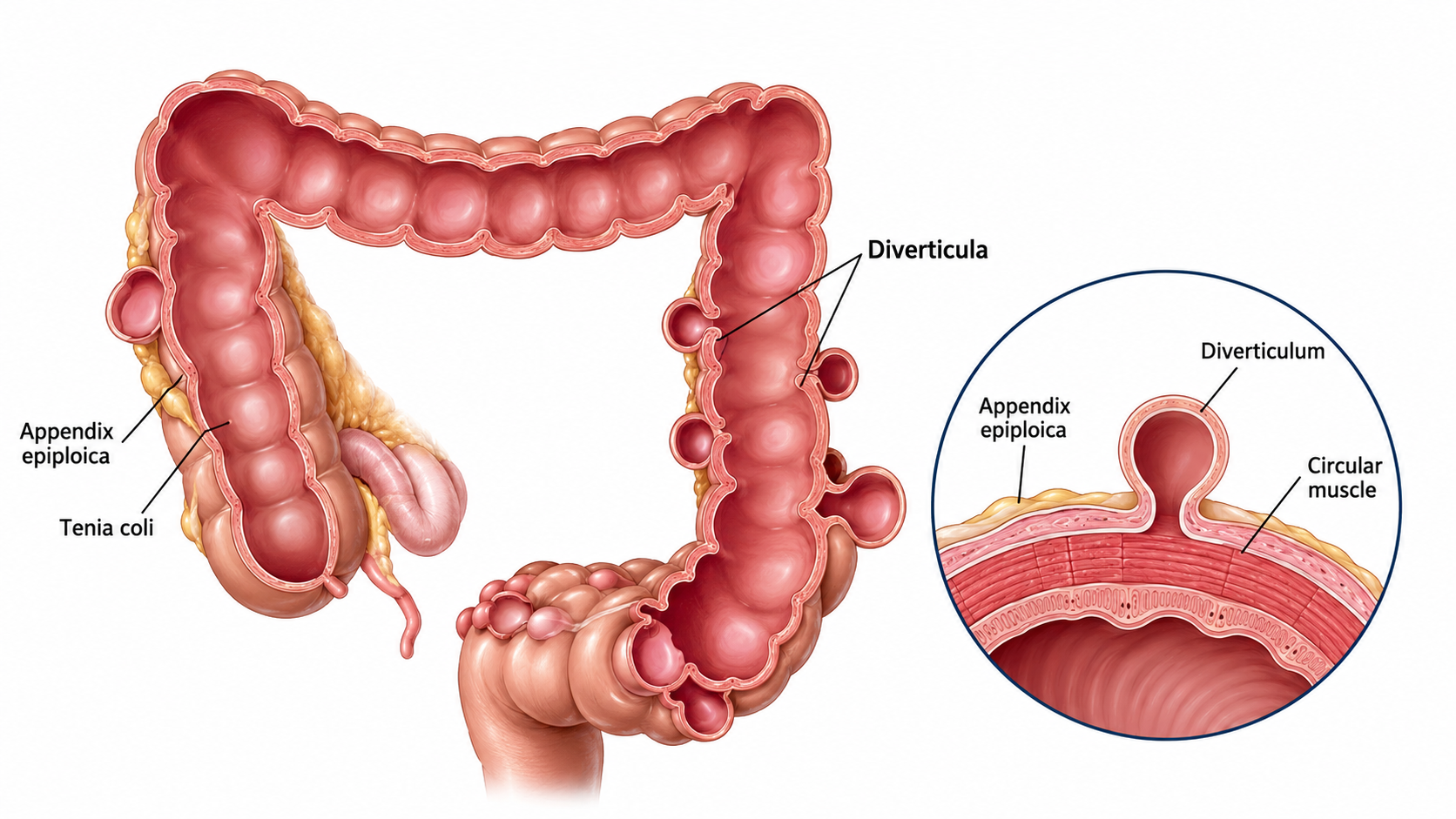
What is diverticular disease?
Diverticular disease is a common condition that affects the large intestine (colon). Small pouches, called diverticula, form in the wall of the colon. This is known as diverticulosis. Many people have diverticulosis without any symptoms.
When these pouches cause symptoms such as abdominal pain or changes in bowel habits, it is called symptomatic diverticular disease.
If one or more pouches become inflamed or infected, the condition is called diverticulitis.
What causes diverticular disease?
The exact cause is not always known, but factors that increase the risk include:
- Increasing age
- A diet low in fibre
- Constipation
- Being overweight
- Lack of regular physical activity
- Smoking
- Family history
What are the symptoms?
Many people have no symptoms at all.
Symptoms of diverticular disease may include:
- Pain or discomfort, usually in the lower left side of the abdomen
- Bloating
- Constipation or diarrhoea
- Passing mucus
- Feeling that the bowel does not empty completely
Symptoms of diverticulitis may include:
- Severe abdominal pain
- Fever or chills
- Nausea or vomiting
- Loss of appetite
- Tenderness over the abdomen
How is it diagnosed?
Your healthcare provider may recommend:
- A medical history and physical examination
- Blood tests
- A CT scan if diverticulitis is suspected
- A colonoscopy after recovery from diverticulitis to examine the colon (not usually during an acute attack)
How is it treated?
Diverticulosis or mild diverticular disease
Treatment may include:
- Eating more fibre
- Drinking plenty of water
- Regular exercise
- Fibre supplements if recommended
- Pain relief as advised by your healthcare provider
Diverticulitis
Treatment depends on how severe the infection is.
It may include:
- Rest
- A temporary low-fibre or liquid diet
- Antibiotics in selected cases
- Pain medication
- Hospital treatment for severe illness
Some people with repeated severe attacks or complications may require surgery.
What should I eat?
A healthy, high-fibre diet is recommended once you have recovered from an attack.
Choose foods such as:
- Wholegrain bread and cereals
- Brown rice
- Oats
- Beans and lentils
- Fresh fruits
- Vegetables
Increase fibre gradually to reduce bloating and gas.
Drink 6–8 glasses of water each day, unless your healthcare provider advises otherwise.
Good to know: Current evidence shows that most people with diverticular disease do not need to avoid nuts, seeds, popcorn, or corn. These foods do not increase the risk of diverticulitis.
When should I seek urgent medical attention?
Seek immediate medical care if you develop:
- Severe or worsening abdominal pain
- Fever above 38°C
- Persistent vomiting
- Heavy bleeding from the rectum
- Black, tarry stools
- A swollen, hard abdomen
- Dizziness, fainting, or signs of dehydration
Can diverticular disease be prevented?
You can reduce your risk by:
- Eating a high-fibre diet
- Drinking enough fluids
- Exercising regularly
- Maintaining a healthy weight
- Avoiding smoking
- Managing constipation without frequent use of laxatives unless advised by your healthcare provider
Living with diverticular disease
Most people with diverticular disease live normal, healthy lives. Following a healthy lifestyle and attending regular medical follow-up can help prevent complications and improve symptoms.
Remember
Contact your healthcare provider if:
- Your symptoms become worse.
- You develop a fever.
- You notice blood in your stool.
- Your bowel habits change for more than a few weeks.
- You have repeated attacks of abdominal pain.
This information is intended to support, not replace, advice from your healthcare provider.
Contact
Please contact our rooms for an appointment if you need any more information about Diverticular Disease of the Colon at (012) 644 1327, or use any of the provided links on our website or facebook page to book or send us an e-mail at unitas@generalsurgery.co.za.
We are dedicated to helping you. Please note that this information is not exclusive
To keep up to date or rate us, please like our social media pages:
https://www.facebook.com/drcjeske
https://www.instagram.com/drchristianjeske/
Image: Supplied