

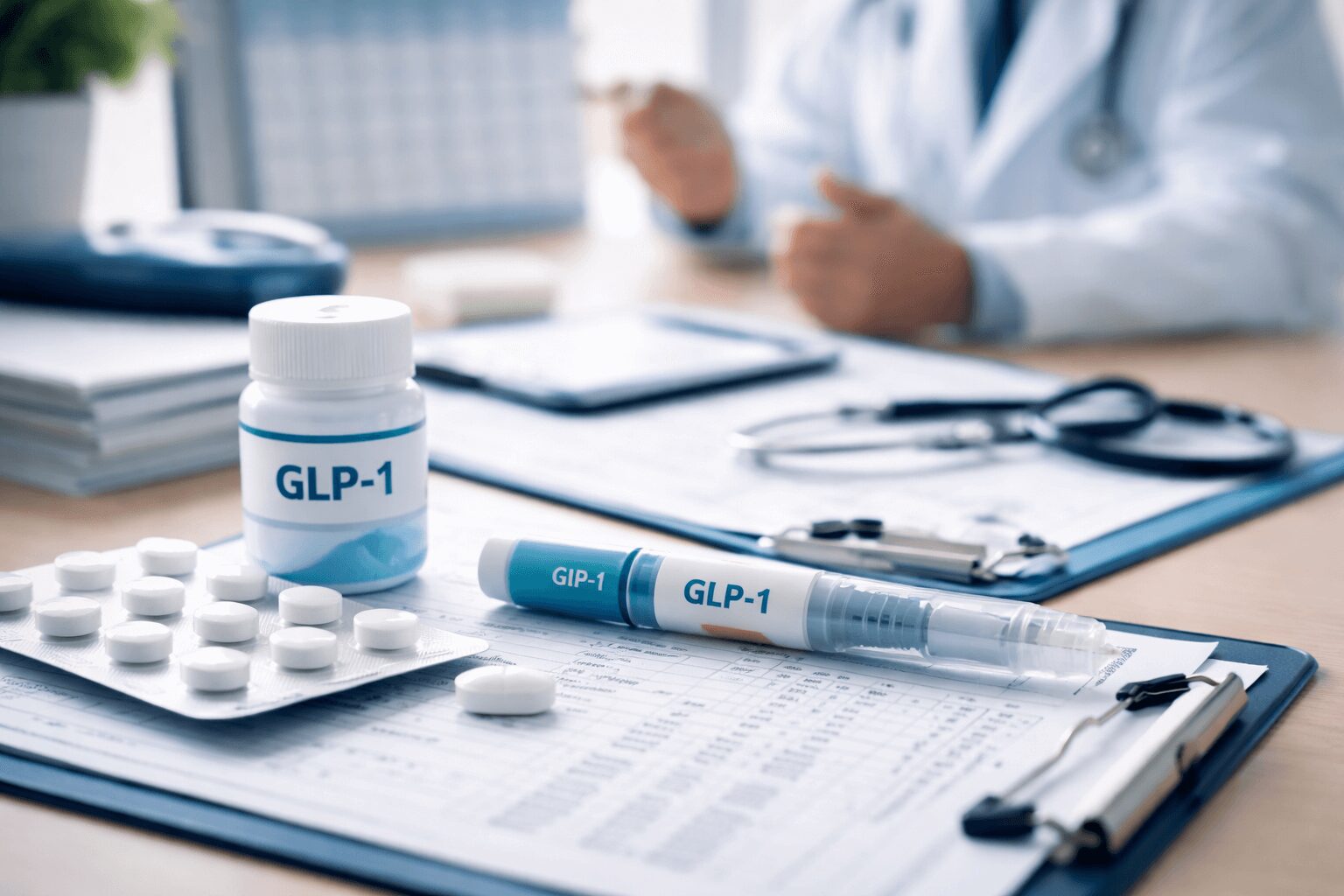
What are GLP-1 medications?
GLP-1 medications are prescription medicines that help regulate appetite, blood sugar and digestion. They are used to treat conditions such as:
- Type 2 diabetes
- Overweight and obesity (in appropriate patients)
- To reduce the risk of heart disease in selected high-risk patients
Examples include semaglutide, liraglutide and tirzepatide.
What are the benefits?
When prescribed by a healthcare professional and combined with healthy eating and regular physical activity, GLP-1 medications may:
- Help you lose weight by reducing hunger and helping you feel full sooner.
- Improve blood sugar control in people with diabetes.
- Lower the risk of developing type 2 diabetes in some people with prediabetes.
- Reduce blood pressure.
- Improve cholesterol levels.
- Reduce fat in the liver.
- Lower the risk of heart attack and stroke in some patients with diabetes or cardiovascular disease.
- Improve overall health and quality of life.
What are the possible side effects?
The most common side effects are usually mild and improve over time, especially when the dose is increased gradually.
These may include:
- Nausea
- Vomiting
- Diarrhoea
- Constipation
- Stomach pain or discomfort
- Heartburn or indigestion
- Feeling full quickly
- Reduced appetite
Are there any serious risks?
Serious side effects are uncommon but can occur.
Seek medical attention immediately if you develop:
- Severe or persistent abdominal pain, especially if it spreads to your back.
- Persistent vomiting leading to dehydration.
- Yellowing of the skin or eyes (jaundice).
- Severe allergic reactions such as swelling of the face or difficulty breathing.
Your doctor may recommend stopping the medication temporarily before surgery because it slows stomach emptying.
Who should not use GLP-1 medications?
These medicines may not be suitable if you:
- Have a personal or family history of medullary thyroid cancer.
- Have Multiple Endocrine Neoplasia type 2 (MEN2).
- Have had a serious allergic reaction to one of these medicines.
Always tell your healthcare provider about your medical history and any other medicines you are taking.
Can these medicines be addictive?
No.
GLP-1 medications are not addictive. They do not produce a “high,” do not cause dependence, and are not drugs of abuse.
However, some people misuse them by:
- Using them without a medical need.
- Taking someone else’s prescription.
- Buying them online or through social media.
- Using higher doses than prescribed.
Using these medicines without medical supervision can be dangerous.
Buying GLP-1 medications safely
Only obtain GLP-1 medications:
- From a registered doctor or healthcare provider.
- From a licensed pharmacy.
- With a valid prescription.
Do not buy injectable medicines from:
- Social media advertisements.
- WhatsApp groups.
- Online marketplaces.
- Friends or family members.
- Unlicensed weight-loss clinics.
Why is this important in South Africa?
South African health authorities have warned about fake and illegally imported GLP-1 medications being sold outside licensed pharmacies.
These products may:
- Contain the wrong amount of medicine.
- Contain harmful or unapproved ingredients.
- Be contaminated during manufacture.
- Not work as expected.
- Cause serious health problems.
Because these medicines are injected, products made or stored incorrectly can pose additional risks.
Getting the best results
GLP-1 medications work best when combined with:
- Healthy eating.
- Regular physical activity.
- Good sleep.
- Ongoing medical follow-up.
- Regular monitoring by your healthcare team.
These medicines are designed to support long-term health and should only be used under medical supervision.
Contact
Please contact our rooms for an appointment if you need any more information about GLP-1 medication at (012) 644 1327, or use any of the provided links on our website or facebook page to book or send us an e-mail at unitas@generalsurgery.co.za.
We are dedicated to helping you. Please note that this information is not exclusive
To keep up to date or rate us, please like our social media pages:
https://www.facebook.com/drcjeske
https://www.instagram.com/drchristianjeske/
Image: Supplied