

Pancreatic cancer is a serious disease that is being diagnosed more frequently around the world. Because it often develops without obvious early symptoms, many people are concerned about how to recognise it, whether it runs in families and what treatment options are available.
Although pancreatic cancer can be difficult to treat, advances in surgery, chemotherapy, genetic testing and specialised cancer care are improving the options available to patients.
What is pancreatic cancer?
The pancreas is an organ situated deep in the upper abdomen, behind the stomach. It has two important functions:
- Producing digestive enzymes that help the body break down food.
- Producing hormones, including insulin, that control blood sugar levels.
Pancreatic cancer develops when abnormal cells in the pancreas begin to grow uncontrollably.
The most common type is pancreatic ductal adenocarcinoma, which develops from cells associated with the pancreatic ducts. This article focuses on this type of cancer. Less common pancreatic neuroendocrine tumours behave differently and often require different treatment.
Is pancreatic cancer increasing worldwide?
Yes. The number of people diagnosed with pancreatic cancer is increasing globally.
According to the International Agency for Research on Cancer, approximately 531,000 people worldwide were diagnosed with pancreatic cancer in 2024, and approximately 491,000 died from the disease.
In many countries, pancreatic cancer rates have been stable or gradually increasing over recent decades. The total number of cases is also rising because populations are growing and people are living longer.
Several factors may be contributing to the increasing burden of pancreatic cancer:
- An ageing population.
- Increasing rates of obesity and type 2 diabetes.
- Tobacco use.
- Changes in lifestyle and metabolic health.
- Improved access to diagnostic investigations.
Importantly, an increase in the total number of cases does not necessarily mean that every individual’s risk is increasing. Trends differ between countries and age groups.
Pancreatic cancer remains less common than breast, prostate or colorectal cancer, but it is one of the leading causes of cancer-related deaths worldwide.
What are the warning signs of pancreatic cancer?
One of the difficulties with pancreatic cancer is that early symptoms can be mild, vague or completely absent.
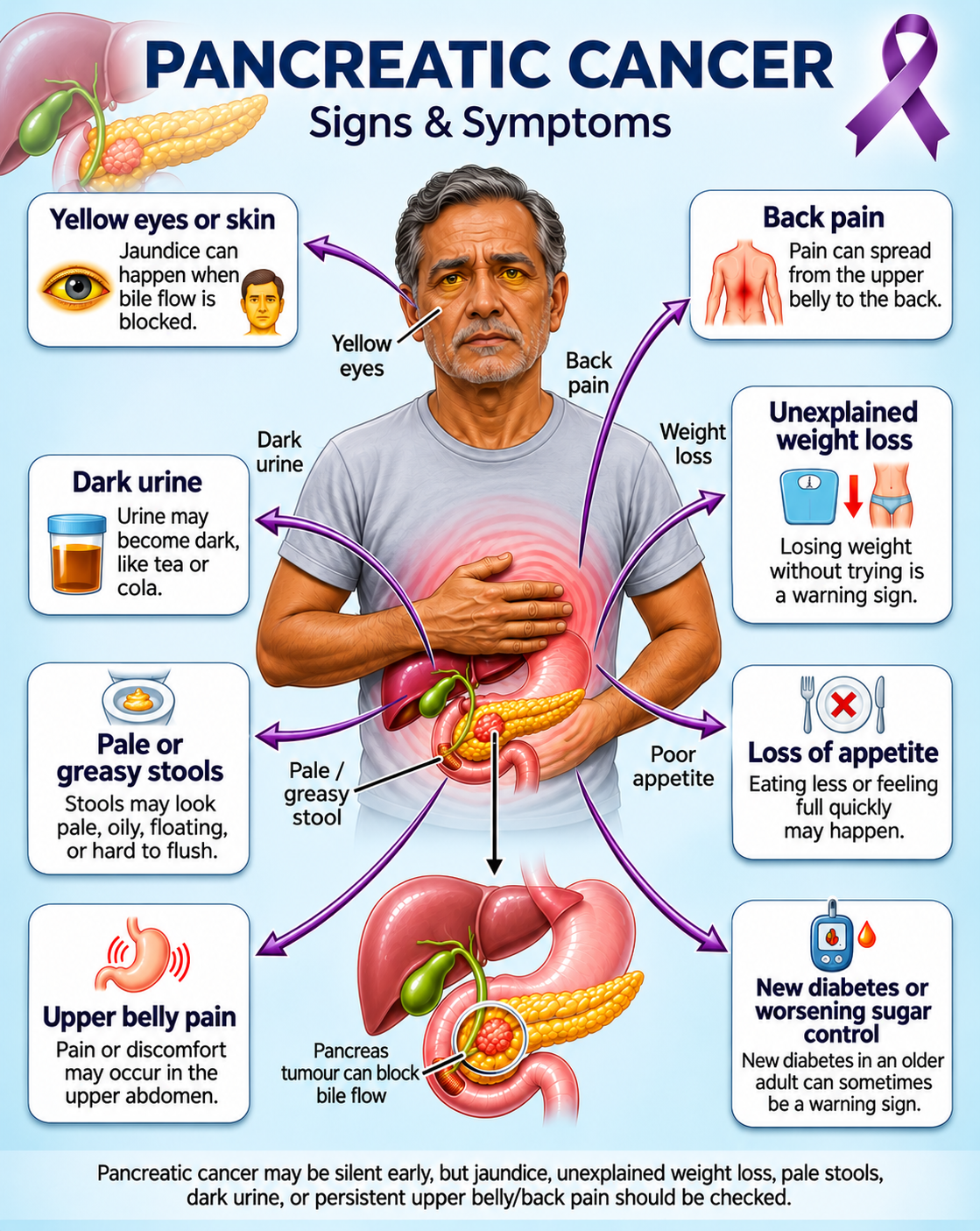
When symptoms do develop, they may include:
- Unexplained weight loss: Losing weight without dieting or changing your exercise routine.
- Upper abdominal pain: Persistent discomfort in the upper abdomen, sometimes extending through to the back.
- Jaundice: Yellowing of the eyes or skin, often accompanied by dark urine, pale stools or itching.
- Loss of appetite: Feeling full quickly, eating less than usual or experiencing nausea.
- Changes in bowel movements: Pale, greasy, floating or difficult-to-flush stools, sometimes caused by poor digestion of fats.
- Newly diagnosed diabetes: Particularly in someone over 50 who is also losing weight unexpectedly.
- Unexplained tiredness: Persistent fatigue without an obvious cause.
These symptoms are much more commonly caused by conditions other than pancreatic cancer. However, symptoms that persist, progress or cannot be explained should be investigated.
New yellowing of the eyes or skin requires prompt medical assessment.
My family member has pancreatic cancer. Am I at risk?
This is one of the most common questions asked by patients.
Having a family member with pancreatic cancer does not mean that you will develop the disease. Most pancreatic cancers occur in people without a strong family history.
However, family history is important because some families carry inherited genetic changes that increase cancer risk.
Your risk may be higher if:
- A parent, brother, sister or child has pancreatic cancer.
- Two or more blood relatives have been diagnosed with pancreatic cancer.
- A family member developed pancreatic cancer at a relatively young age.
- There is a family history of pancreatic cancer together with breast, ovarian, prostate or certain bowel cancers.
- A known inherited cancer-related gene alteration is present in your family.
Certain inherited genetic changes, including those involving the BRCA1, BRCA2, PALB2, ATM and CDKN2A genes, can increase pancreatic cancer risk. Some inherited cancer syndromes, such as Lynch syndrome, are also associated with increased risk.
Should I have genetic testing?
If pancreatic cancer has been diagnosed in your family, discussing your family history with a doctor or genetic counsellor is advisable.
Genetic testing is generally recommended for people diagnosed with pancreatic cancer, even when there is no obvious family history.
Where possible, testing the family member who has pancreatic cancer first is often the most informative approach. Their results can help determine whether other relatives should be tested.
A genetic consultation can help establish whether additional screening or monitoring is appropriate.
Should I have regular pancreatic scans?
Routine screening is not recommended for everyone, including most people with only one affected relative and no known inherited genetic risk.
However, people with a sufficiently strong family history or certain inherited genetic conditions may benefit from pancreatic surveillance.
This is usually performed using:
- MRI or MRCP: A specialised scan that examines the pancreas and its ducts.
- Endoscopic ultrasound (EUS): A specialised endoscopy that allows detailed ultrasound examination of the pancreas.
For many eligible high-risk individuals, surveillance starts around age 50 or approximately 10 years before the youngest pancreatic cancer diagnosis in the family. Some inherited conditions require earlier screening.
Screening decisions should be individualised and ideally managed by a specialist pancreatic team. Regular blood tests or tumour markers alone are not reliable screening methods.
What increases your risk of pancreatic cancer?
Not everyone with pancreatic cancer has an identifiable risk factor. Nevertheless, several factors are known to increase the likelihood of developing the disease.
1. Smoking
Smoking is one of the most important preventable risk factors for pancreatic cancer. Stopping smoking reduces the risk over time.
2. Increasing age
Pancreatic cancer is more common in older adults, particularly after the age of 60, although younger individuals can also be affected.
3. Obesity and metabolic health
Excess body weight, particularly abdominal obesity, is associated with increased pancreatic cancer risk.
4. Diabetes
Long-standing type 2 diabetes is associated with an increased risk of pancreatic cancer. Occasionally, pancreatic cancer itself can cause new-onset diabetes, especially when accompanied by unexplained weight loss.
Most people with diabetes will never develop pancreatic cancer.
5. Chronic pancreatitis
Long-term inflammation of the pancreas increases risk, particularly in people with hereditary pancreatitis.
6. Family history and inherited genetic conditions
Having close blood relatives with pancreatic cancer or carrying certain inherited genetic alterations can increase risk.
7. Heavy alcohol consumption
Heavy drinking can contribute to chronic pancreatitis and may increase pancreatic cancer risk. Limiting alcohol consumption is advisable.
Can pancreatic cancer be prevented?
There is no guaranteed way to prevent pancreatic cancer, but maintaining good general health may reduce your risk.
The most useful steps include avoiding smoking, maintaining a healthy weight, exercising regularly, eating a balanced diet, limiting alcohol and managing diabetes appropriately.
People with a significant family history should also discuss genetic risk assessment with their doctor.
How is pancreatic cancer diagnosed?
When pancreatic cancer is suspected, several investigations may be necessary.
CT scan
A specialised contrast-enhanced CT scan is often the first major investigation. It helps identify a pancreatic tumour, examine nearby blood vessels and determine whether the cancer has spread.
MRI or MRCP
An MRI provides additional information about the pancreas, liver and bile ducts.
Endoscopic ultrasound (EUS)
An ultrasound probe is passed through the mouth into the stomach and small intestine. This allows the doctor to examine the pancreas closely and, when appropriate, obtain a small tissue sample for diagnosis.
Blood tests
Blood tests assess liver function, blood sugar and general health. A tumour marker called CA 19-9 may help monitor certain pancreatic cancers, but it cannot reliably diagnose pancreatic cancer on its own.
Further investigations may be needed to determine the stage of the disease and plan treatment.
What treatment options are available?
Treatment depends on the location and stage of the cancer, whether it has involved important blood vessels or spread elsewhere, and the patient’s overall health.
Ideally, pancreatic cancer should be managed by a multidisciplinary team that includes specialist pancreatic surgeons, oncologists, radiologists, gastroenterologists and other healthcare professionals.
1. Surgery
Surgery offers the best opportunity for long-term survival when the cancer can be completely removed.
The type of operation depends on the location of the tumour.
- Whipple procedure: Usually performed for cancers involving the head of the pancreas. It involves removing the pancreatic head, duodenum, gallbladder and part of the bile duct, followed by reconstruction.
- Distal pancreatectomy: Removes the body or tail of the pancreas, often together with the spleen.
- Total pancreatectomy: Occasionally required when the entire pancreas needs to be removed.
These are major operations that should be performed by appropriately experienced pancreatic surgical teams.
Not every pancreatic tumour can be removed safely at diagnosis. In some patients, chemotherapy is given first to improve the chance of successful surgery.
2. Chemotherapy
Chemotherapy uses medication to destroy or control cancer cells.
It may be recommended:
- Before surgery to shrink or control the tumour.
- After surgery to reduce the risk of recurrence.
- When surgery is not possible.
- When cancer has spread to other organs.
Several chemotherapy combinations are available. Treatment is tailored to the patient’s health, cancer characteristics and treatment goals.
3. Radiotherapy
Radiotherapy uses targeted radiation to treat cancer cells.
It may be considered in selected patients, particularly when a tumour cannot be removed surgically or when local tumour control or symptom relief is needed.
4. Targeted therapy and immunotherapy
Modern cancer treatment increasingly considers the genetic characteristics of an individual tumour.
Certain genetic changes may make a patient eligible for targeted medication. Immunotherapy may also benefit a small proportion of patients whose tumours have specific molecular features.
These treatments are not suitable for every pancreatic cancer, but genetic and molecular testing can help identify patients who may benefit.
5. Supportive and palliative care
Supportive care is important at every stage of pancreatic cancer treatment.
It may include:
- Managing pain and nausea.
- Improving nutrition and maintaining weight.
- Pancreatic enzyme supplements to improve digestion.
- Treatment of diabetes.
- Endoscopic stent placement to relieve bile duct obstruction and jaundice.
- Psychological and emotional support for patients and their families.
Palliative care does not mean that treatment has stopped. It focuses on improving comfort and quality of life and can be provided alongside active cancer treatment.
Can pancreatic cancer be cured?
Pancreatic cancer remains challenging to treat, particularly when it is diagnosed at an advanced stage.
However, outcomes vary considerably.
Patients whose cancer is identified early and can be completely removed surgically have the best chance of long-term survival. Chemotherapy and other treatments can further improve outcomes or help control the disease.
For patients with more advanced cancer, treatment may slow progression, relieve symptoms and improve quality of life.
Every patient is different. Prognosis depends on the extent of the cancer, its biological characteristics, general health and response to treatment.
When should you consult a doctor?
You should seek medical advice if you experience persistent or unexplained symptoms, particularly:
- Yellowing of the skin or eyes.
- Unexplained weight loss.
- Persistent upper abdominal or back pain.
- New-onset diabetes accompanied by unexplained weight loss.
- Persistent appetite loss or changes in digestion.
You should also discuss your risk with a doctor if several family members have developed pancreatic cancer or if an inherited cancer-related genetic alteration has been identified in your family.
The importance of specialist pancreatic care
Pancreatic cancer requires careful assessment and an individualised treatment approach.
An accurate diagnosis, appropriate staging and early multidisciplinary discussion are important for determining whether surgery, chemotherapy or other treatments are most suitable.
The key message is that pancreatic cancer does not always cause obvious early symptoms, but recognising concerning changes, understanding your family history and obtaining specialist advice can help ensure timely investigation and appropriate treatment.
This information is intended to support, not replace, advice from your healthcare provider.
Contact
Please contact our rooms for an appointment if you need any more information about Pancreatic Cancer at (012) 644 1327, or use any of the provided links on our website or facebook page to book or send us an e-mail at unitas@generalsurgery.co.za.
We are dedicated to helping you. Please note that this information is not exclusive
To keep up to date or rate us, please like our social media pages:
https://www.facebook.com/drcjeske
https://www.instagram.com/drchristianjeske/
Image: Supplied